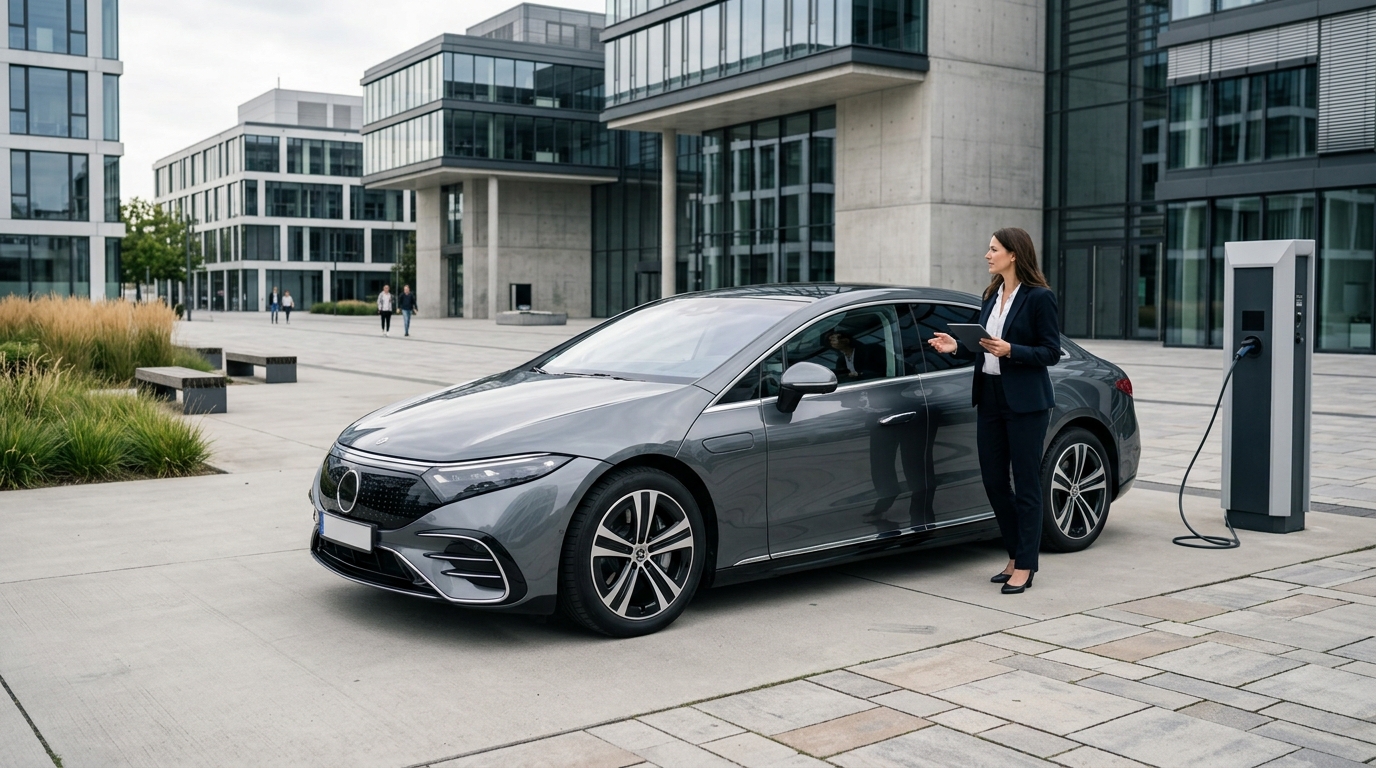
The Federal Ministry for the Environment (BMUKN) is preparing to officially launch the E-Auto-Förderung 2026 program this May. Framed as a crucial social welfare mechanism, the initiative is designed to shield low- and middle-income households from the escalating costs of the mobility transition while driving the decarbonization of the transport sector. While the application portal opens in May, the program operates retroactively, covering eligible registrations dating back to January 1, 2026. For German auto dealers and leasing companies, understanding the exact regulatory parameters is essential for effectively guiding customers and managing point-of-sale operations.
Dealerships must first audit their vehicle inventory alignment. The E-Auto-Förderung 2026 strictly targets private individuals purchasing or leasing new vehicles. Supported vehicle categories include Battery Electric Vehicles (BEVs), Range-Extended Electric Vehicles (REEVs), and Plug-in Hybrid Electric Vehicles (PHEVs). Pre-existing or used EVs are categorically ineligible. To qualify, the vehicle must be registered for the first time in Germany and is restricted entirely to personal use.
For fleet and inventory managers forecasting upcoming quarters, a critical timeline is the treatment of hybrid technologies. Currently, PHEVs and REEVs enjoy lenient eligibility criteria, but this is only guaranteed for vehicle registrations completed by June 30, 2027. Stricter requirements will be enforced for any registrations starting July 1, 2027. Additionally, the program enforces a mandatory 36-month holding period for the vehicle, a condition that leasing desks must incorporate into their standard contracting. Buyers have a strict 12-month deadline post-registration to submit their applications, while the broader funding window runs until December 31, 2029 (or until budget depletion).
A persistent challenge on the sales floor is quoting the final cost to the consumer, particularly when attempting to stack state aid with OEM promotions or internal dealership discounts. While the regulatory framework does permit the stacking of incentives, current administrative documentation contains unresolved discrepancies regarding the exact combined maximum cap. Because of these conflicting internal guidelines, dealerships in Germany should exercise extreme caution. Until the BMUKN or corresponding federal authorities issue definitive clarification, sales representatives should avoid guaranteeing an absolute combined maximum subsidy amount. Selling based on an assumed ceiling risks significant customer friction if the final approved government cap falls short of expectations.
The most profound operational shift for German dealers lies in the Know Your Customer (KYC) and application process. Unlike some previous models, the state guidelines strictly prohibit car dealers and private actors from applying for the funding directly on behalf of the individual. If a dealership wishes to streamline the process as an authorized proxy—navigating document ingestion and OCR processing—they must operate under the explicit legal umbrella of a user-granted Power of Attorney (Vollmacht).
The customer's digital identity and financial means testing form the core of the KYC workflow. The primary digital identity system is BundID, which requires the applicant to authenticate utilizing either an ELSTER certificate or an activated Online-Personalausweis (eID). Furthermore, income verification demands the manual upload of the applicant's official income tax assessments (Steuerbescheid) issued by the tax office (Finanzamt). The rules specifically dictate that the two most recent tax assessments must be provided, and these documents can be no older than three calendar years. This places an educational burden on the dealership to ensure buyers are fully prepared with their financial documentation and BundID credentials before attempting to finalize the process.
Finally, finance and insurance (F&I) managers must recalibrate cash-flow expectations. The E-Auto-Förderung 2026 utilizes a strict post-purchase reimbursement delivery model. The government pays the approved subsidy as a lump sum directly to the private purchaser or lessee, rather than funnelling it through the dealership to lower the upfront invoice price. The entire process takes place via a one-step online application on a digital portal managed by the Federal Office for Economic Affairs and Export Control (BAFA), taking place only after the vehicle is successfully registered.
At CivilAuto, we note that while there is a rigorous 36-month mandatory holding period, the payout logistics are favorable to the consumer: the lump sum payout is not delayed until the end of this three-year period. Instead, the funds are dispersed shortly after the application and manually uploaded tax documents have been successfully examined by the administrative authority. Navigating these bureaucratic realities transparently will be a key competitive differentiator for German dealers this year.