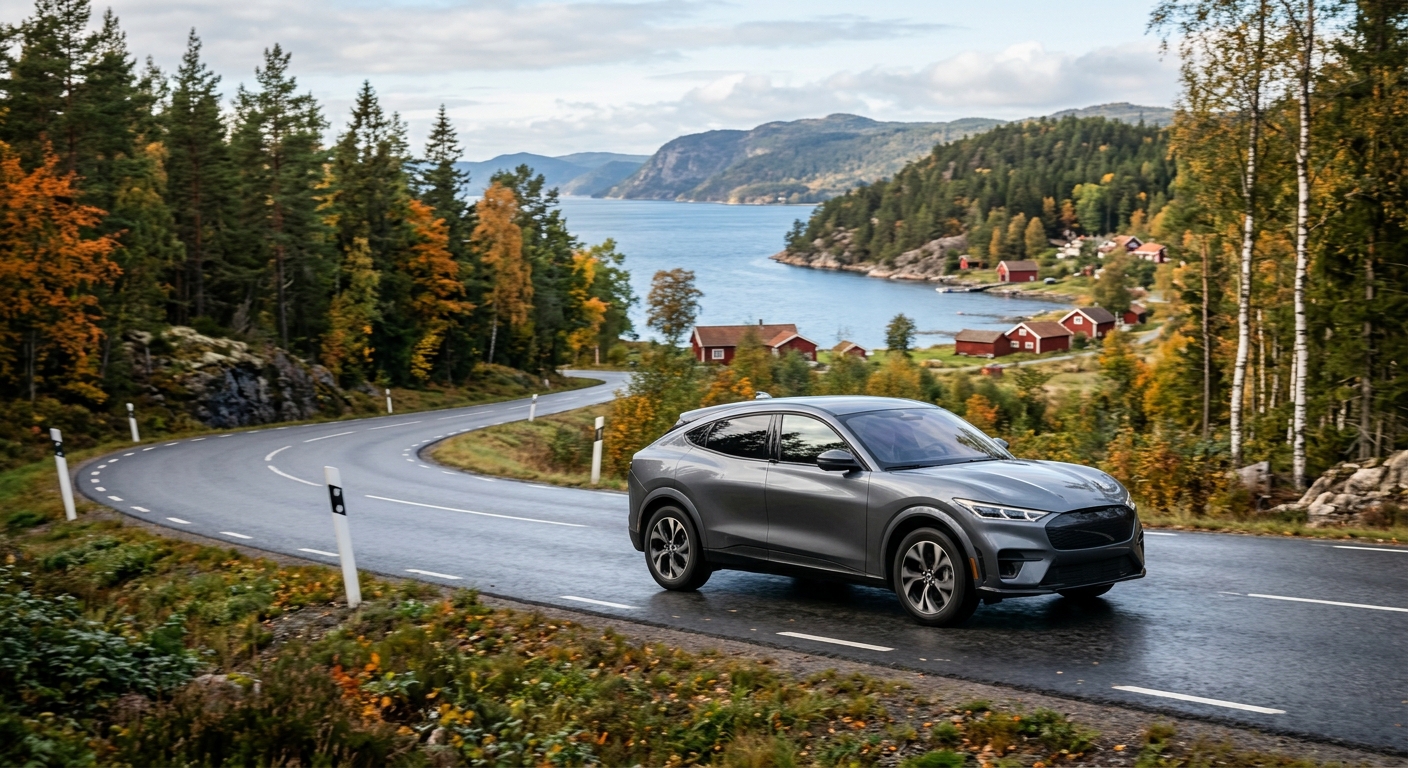
The European Union’s Social Climate Fund (SCF) has officially pivoted from high-level Brussels policy to domestic administrative reality in Sweden. With a comprehensive budget of €532.7 million explicitly allocated to Swedish mobility support, the government has inaugurated the "Riktad elbilspremie" (Targeted Electric Car Premium). This program is designed to alleviate transport poverty ahead of the full financial impact of the European Emissions Trading System (ETS2). For the 115,500 targeted beneficiaries across the nation, this initiative provides vital economic bridging. For automakers, auto-finance lenders, lease providers, and compliance authorities, the program enforces a rigid, uncompromising set of eligibility thresholds, Know Your Customer (KYC) requirements, and vehicle price caps. These rules will immediately reshape the zero-emission automotive landscape across rural Sweden. As the European mobility sector navigates the complexities of state-funded climate subsidies, Sweden’s execution of the SCF stands as a premier example of highly digitized, hyper-targeted welfare economics.
Sweden achieved ETS2 compliance rapidly, securing its formal status on February 12, 2025. This swift legislative alignment culminated in the official approval of its Social Climate Plan by the European Commission on December 11, 2025, following a comprehensive submission earlier that year on June 27. The funding mechanics behind the Riktad elbilspremie illustrate a significant joint commitment: a direct EU allocation of €389.7 million is robustly bolstered by €133.2 million in mandatory national co-financing. Instead of deploying a broad, universally accessible scattergun approach—a method often criticized for subsidizing wealthy early adopters—the Swedish Ministry of Climate and Enterprise (Klimat- och näringslivsdepartementet) is funneling these specific resources exclusively into the mobility sector. The objective is unmistakable: to prevent low- to middle-income households situated in areas fundamentally lacking viable public transport infrastructure from bearing the financial brunt of accelerating carbon fuel prices. Opening for applications on March 18, 2026, and legally mandated to run until June 30, 2029, this application window marks a prolonged, highly structured period of state intervention in the private vehicle market.
The Riktad elbilspremie discards the historical notion of a universal EV subsidy. Eligibility is strictly, and mathematically, constrained by geography and household composition. The program precisely targets residents of 177 designated rural municipalities. These are officially classified under Swedish administrative standards as sparse mixed, peri-urban rural, sparse rural, or very sparse rural. Alongside these municipalities, the state has identified 433 specific sub-municipal areas where public transport is empirically insufficient—quantified rigidly by the state as experiencing fewer than 243 transit departures per week per kilometer. To even initiate an application, an individual must be legally registered (folkbokförd) as a resident in one of these approved geographic zones. The applicant must be at least 18 years old and possess a valid Swedish Personal Identity Number (personnummer). Furthermore, Sweden implements a stringent fiscal character test that extends to the entire household: no member of the registered household may hold active vehicle-related debts with the Swedish Enforcement Authority (Kronofogdemyndigheten). By drawing these absolute boundaries, the Swedish state ensures that the subsidy reaches individuals who are genuinely, structurally dependent on private vehicles, effectively barring urban commuters with access to extensive rail and bus networks from draining the fund.
Sweden has engineered the subsidy into two distinct financial tiers, evaluated through complex income verifications. The system calculates eligibility based on consumption units (konsumtionsenheter), adjusting for household size and demographic composition. The primary metric utilized is the applicant's most recently established earned income (fastställd förvärvsinkomst), which is then strictly adjusted by adding any surplus from capital (överskott av kapital) and deducting any deficit from capital (underskott av kapital). A crucial, unyielding absolute ceiling exists across all support tiers: no individual over the age of 20 within the household may earn enough to pay Swedish state income tax (statlig inkomstskatt). If a single resident triggers this tax bracket, the entire household is disqualified.
Tier 1, the Ordinarie Elbilspremie (Standard Electric Car Premium), is engineered as a slow-release subsidy, providing SEK 1,300 per month over a mandatory 36-month period, capping out at a total maximum of SEK 46,800. There is no upfront grant permitted in this tier. Income limits are scaled aggressively: a single adult household must earn no more than SEK 352,000 annually. A single parent with one child sees the cap raised to SEK 535,040, while a parent with three children is capped at SEK 830,720. A household of two adults faces a combined limit of SEK 531,520, and a larger family consisting of two adults and three children can qualify with a combined household income up to SEK 1,010,240.
Tier 2, the Starttillägg (Low-Income Start-up Supplement), is designed expressly to lower the initial capital barrier to entry for the poorest households—defined as those falling below 50% of the national median income. This premium package adds a substantial upfront lump sum of SEK 18,000 to the ongoing SEK 1,300 monthly payments. Over the full 36-month duration, this yields a maximum state support of SEK 64,800. The income thresholds here are significantly tighter and strictly enforced. A single adult is legally limited to an income of SEK 220,000. A single parent with three children is capped at SEK 519,200. Two adults are strictly capped at a combined SEK 332,200, and a family of two adults and three children can earn up to a maximum of SEK 631,400.
The hardware rules within the Riktad elbilspremie underscore a purely electric, uncompromising future. Plug-in hybrid electric vehicles (PHEVs), regardless of their electric range, are entirely excluded. The program strictly mandates 100% zero-emission pure electric vehicles (ren elbil). Crucially for the secondary market, both new and used vehicles qualify, a detail that broadens accessibility for lower-income applicants who cannot afford showroom prices. However, state price controls are exceedingly strict to prevent the accidental subsidization of premium or luxury models. The absolute maximum vehicle price cap is set firmly at SEK 450,000. For households opting for a finance or lease structure, the maximum allowable monthly lease cap is SEK 4,600. Usage rules further restrict commercial gaming of the welfare system. The vehicle must be legally registered as a passenger car, be active, remain on the road, and be entirely free of any driving bans. It cannot be utilized for commercial purposes. To prevent familial flipping and artificial sales, the car cannot have been previously owned by a close relative or a related commercial entity. The vehicle must be acquired no more than two months prior to the application date, and no later than four months after official state approval. Furthermore, the applicant is legally bound to retain ownership or the official lease contract for the entire 36-month subsidy duration.
Administrating a multi-year, highly dynamic, income-dependent monthly subsidy requires an extraordinarily robust digital infrastructure. Sweden relies heavily on its globally recognized digital identity framework, primarily utilizing BankID (eIDAS level: Substantial). Initial applications are seamlessly processed through the Swedish Environmental Protection Agency's dedicated e-service portal (Naturvårdsverket e-tjänst) via BankID authentication. Income verification is completely automated via secure API integrations with the Swedish Tax Agency (Skatteverket). The backend system evaluates the Final Tax Assessment (Slutskattebesked) across the N-1 and N-2 tax years, leaving no room for manual tampering. Private sector entities—such as leasing companies or accredited dealerships—can technically verify this sensitive data to streamline point-of-sale financing. However, they must execute this via the OAuth2 Authorization Code Grant flow. This strict process requires explicit, cryptographically verifiable digital consent from the citizen to act as an authorized digital proxy ("ombud"), strictly adhering to the confidential nature of Swedish taxation information.
The payout logistics dictate a transparent and highly regulated money trail. Funds flow from the European Commission to the Swedish Government, are processed by Naturvårdsverket, and are directly deposited into the citizen's privately registered bank account. Post-eligibility bureaucracy is dense: it requires vehicle registration in the Swedish Transport Agency's road traffic register, an intentional 10-day synchronization delay after registration to ensure cross-agency data fidelity, and independent registration of the personal bank account with Swedbank's Account Register. The state also conducts continuous debt checks via Kronofogden and mandates ongoing residential compliance monitoring for the first 12 months of the subsidy period. Regarding GDPR and data sovereignty, retention policies are firmly grounded in the Swedish Archives Act (Arkivlagen, 1990:782) and the fundamental constitutional principle of Public Access to Information (Offentlighetsprincipen). The Swedish Data Protection Act (Dataskyddslagen) allows authorities to retain personal data for extended periods if processed for archiving in the public interest, overriding standard commercial erasure requests.
For the broader European automotive sector, Sweden's meticulous deployment of the SCF illustrates the operational realities and compliance burdens of modern state-funded mobility support. Market participants must rapidly align their inventory pipelines and financing models to the SEK 450,000 price cap and the strict SEK 4,600 leasing limit, a reality that heavily favors entry-level EVs and bolsters the secondary, used electric market. As noted by industry analysts and platforms like CivilAuto, understanding these hyper-local, API-driven compliance layers is non-negotiable for automakers and dealers seeking to maintain volume in rural Scandinavian markets as the true cost of ETS2 pricing materializes. The Riktad elbilspremie represents a highly targeted, technologically integrated approach to climate adaptation. By leveraging automated tax APIs, unyielding debt checks, and surgical geographic boundaries, Sweden is attempting to ensure that every single krona of its €532.7 million combined allocation serves its explicitly intended purpose: keeping vulnerable rural populations economically mobile in an accelerating, decarbonizing economy.