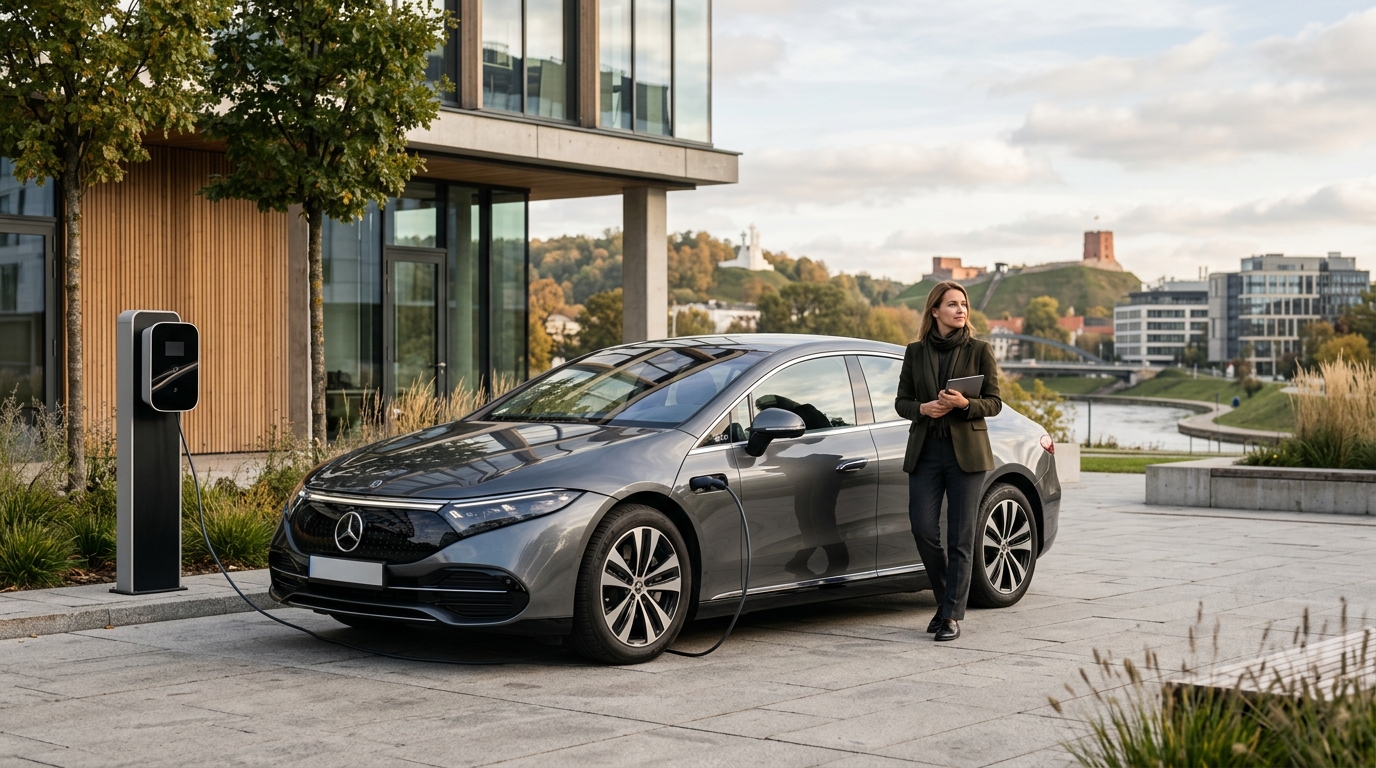
The transition toward zero-emission mobility in Lithuania is underpinned by a carefully structured blend of national execution and European capital. As the European Union shifts its focus toward broader environmental support mechanisms, Lithuania’s primary electric vehicle incentive programme, officially designated as Grynųjų elektromobilių įsigijimo skatinimas, offers a blueprint for how member states can leverage existing mechanisms to prepare for the upcoming Social Climate Fund (SCF).
At the core of the active Lithuanian initiative is a confirmed budget allocation of €50 million. The framework, which officially launched on June 2, 2022, is scheduled to run continuously until December 31, 2026. Rather than relying solely on direct state taxation revenues, the programme represents a mixed funding model. It is primarily financed through the Modernisation Fund, a dedicated European financial instrument designed to support lower-income member states in their complex transition to climate neutrality.
The mechanics of this funding are deeply rooted in carbon markets. The capital is generated from the revenues of auctioning two percent of the total allowances under the EU Emissions Trading System (ETS). These funds are subsequently managed and distributed by the Lithuanian national government to directly subsidize citizen vehicle purchases. CivilAuto researchers note that this direct pipeline from carbon pricing to consumer mobility incentives creates a highly sustainable financial loop that protects the domestic budget.
Crucially, this existing architecture significantly streamlines Lithuania's adoption of the SCF. Because the country already utilizes EU ETS auction revenues to finance its electric vehicle program, the eventual transition to the new framework is expected to be largely administrative. The foundational groundwork is already in place. Market projections indicate that SCF capital will likely replace or augment the current Modernisation Fund allocations without interrupting the flow of aid to the consumer.
One of the most notable potential impacts of this administrative shift involves the secondary market for electric vehicles. The integration of SCF funds aligns closely with the overarching European goal of democratizing green mobility for lower-income households. Consequently, this transition could trigger a direct increase in the existing €2,500 subsidy currently earmarked for used electric vehicles. By boosting support for the secondary market, the state can accelerate fleet turnover without requiring everyday consumers to purchase premium-priced new models.
While the financial architecture and timeline of the domestic programme are highly transparent, prospective applicants should note that granular criteria regarding specific vehicle eligibility rules—such as exact price caps for new models or leasing constraints—and localized applicant income thresholds are not fully detailed in the high-level funding release. The state has focused its recent disclosures strictly on the macroeconomic funding mechanisms rather than individual application mechanics.
For Lithuanian drivers, the current message is one of institutional stability. The €50 million commitment and the seamless integration of Modernisation Fund capital into future SCF channels ensure that domestic state support remains a reliable factor in the automotive market through the end of 2026. As the administrative handover progresses, consumers should closely monitor potential increases to secondary market incentives, which stand to be the most direct consumer benefit of the incoming European regulatory era.