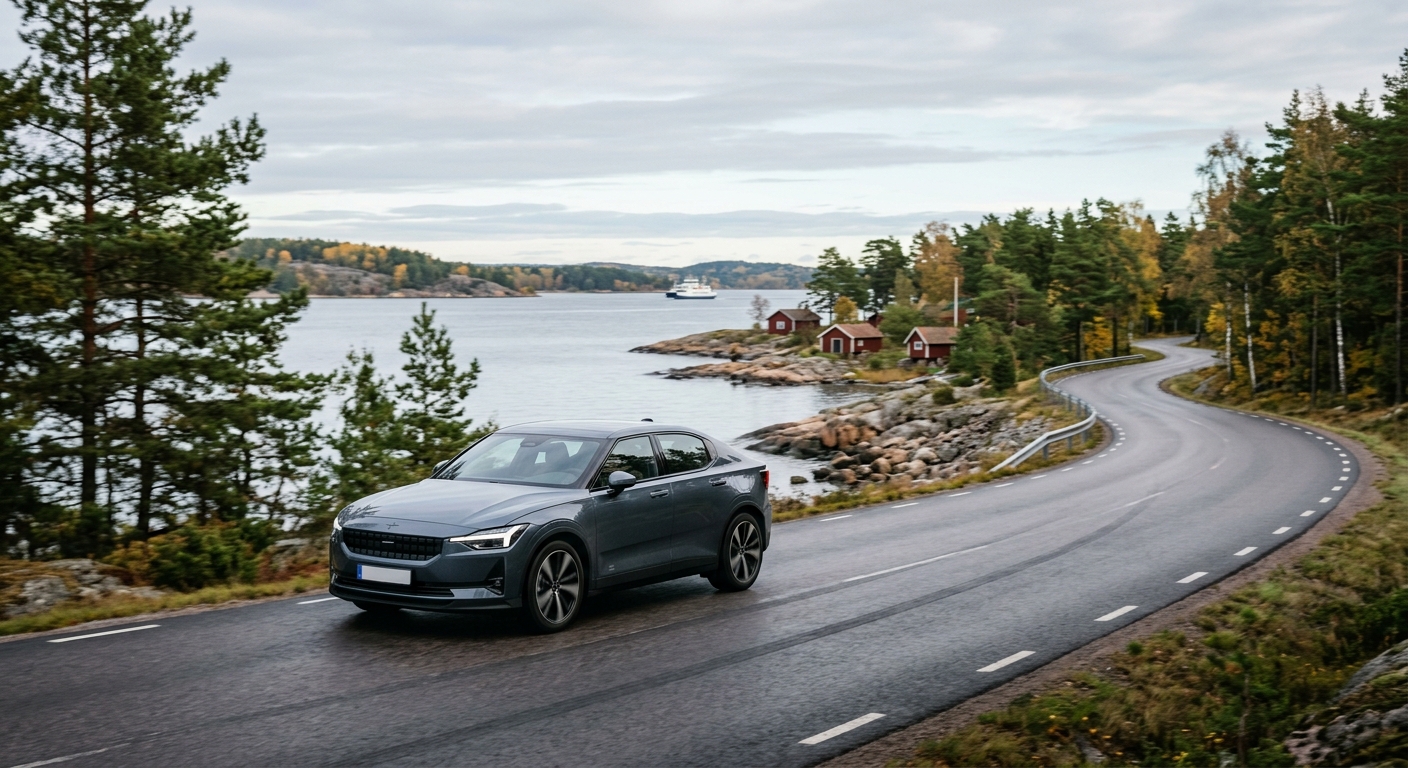
The European Union’s structural shift toward decarbonized road transport has reached a critical implementation phase in Sweden. Driven by the expansion of the Emissions Trading System (ETS2), which introduces carbon pricing to the transport sector, the EU is simultaneously deploying its Social Climate Fund (SCF) to ensure equitable mobility. In Sweden, this has officially materialized as the "Riktad elbilspremie" (Targeted Electric Car Premium). Opening its digital doors to applicants on March 18, 2026, the program marks a definitive transition from broad-based environmental rebates to highly targeted, socio-economically calibrated support designed specifically for rural communities.
At its core, the Swedish rollout is an extensive financial endeavor intended to facilitate the purchase or leasing of approximately 115,500 zero-emission vehicles by the program's closure in June 2029. The financial architecture underpinning this initiative relies on a total allocated pool of €532.79 million. The European Union provides the lion’s share, supplying €389.7 million directly from the SCF. Sweden complements this with a mandatory domestic co-financing contribution of €133.2 million. The country achieved early ETS2 compliance in February 2025, which paved the way for the formal approval of its Social Climate Plan (SCP) on December 11, 2025. Additionally, unofficial market estimates suggest the Swedish government has injected an extra 100 million SEK into the 2026 state budget to expedite immediate approvals.
The mechanics of the "Riktad elbilspremie" are strict, moving away from past flat-rate models. Instead, eligibility is determined through a sophisticated calculation of household consumption units, cross-referencing most recently established earned income and capital surpluses. The overriding rule is a hard cap: no individual over the age of 20 in the applicant's household may pay Swedish state income tax (statlig inkomstskatt).
The program offers two distinct subsidy tiers. The Standard Electric Car Premium (Ordinarie Elbilspremie) provides a maximum of 46,800 SEK, distributed directly to the consumer at a rate of 1,300 SEK per month for 36 months. Income ceilings scale logically with household size; a single adult is capped at a maximum annual income of 352,000 SEK, a two-adult household at 531,520 SEK, and a larger family (two adults, three children) at 1,010,240 SEK.
For households facing deeper financial constraints, the state provides a Low-Income Start-up Supplement (Starttillägg). This elevated package offers up to 64,800 SEK. Crucially, it attempts to bridge the initial capital barrier of EV acquisition by issuing an upfront grant of 18,000 SEK alongside the first monthly payment, followed by 36 months of 1,300 SEK installments. Naturally, the income thresholds here are tighter: 220,000 SEK for a single adult and 332,200 SEK for two adults.
To prevent market distortion and premium pricing, state capital is strictly ring-fenced. Only 100% zero-emission pure electric vehicles (ren elbil) qualify; plug-in hybrids are entirely excluded. Vehicles can be new or used, but the purchase price must not exceed 450,000 SEK, and monthly leases are strictly capped at 4,600 SEK. The applicant must retain ownership or the lease contract for a minimum of 36 months, commercial usage is prohibited, and the vehicle cannot be purchased from a close relative. A strict KYC framework enforces these rules, requiring applicants to possess a valid BankID and prove they carry no vehicle-related debts with the Swedish Enforcement Authority (Kronofogdemyndigheten).
Geographically, this is fundamentally a rural mobility intervention. Eligibility requires legal registration (folkbokförd) in one of 177 designated rural municipalities or 433 sub-municipal areas suffering from limited public transport (defined mathematically as fewer than 243 departures per week per kilometer). All applications are centralized through the Swedish Environmental Protection Agency’s (Naturvårdsverket) e-service portal, which interfaces securely with the Tax Agency (Skatteverket) to automatically calculate household eligibility.
Navigating the intersection of tax data, geographic zoning, and vehicle price caps requires precision. Platforms like CivilAuto provide tools to help prospective buyers pre-verify their geographic and financial standing against strict state parameters before committing to a 36-month lease. As applications progress, Sweden’s targeted approach will serve as a definitive test case for the wider European SCF deployment, revealing whether rigorous, data-driven subsidies can effectively democratize electric mobility without inflating local auto markets.